Kids · 1 page
Kids daily chore chart
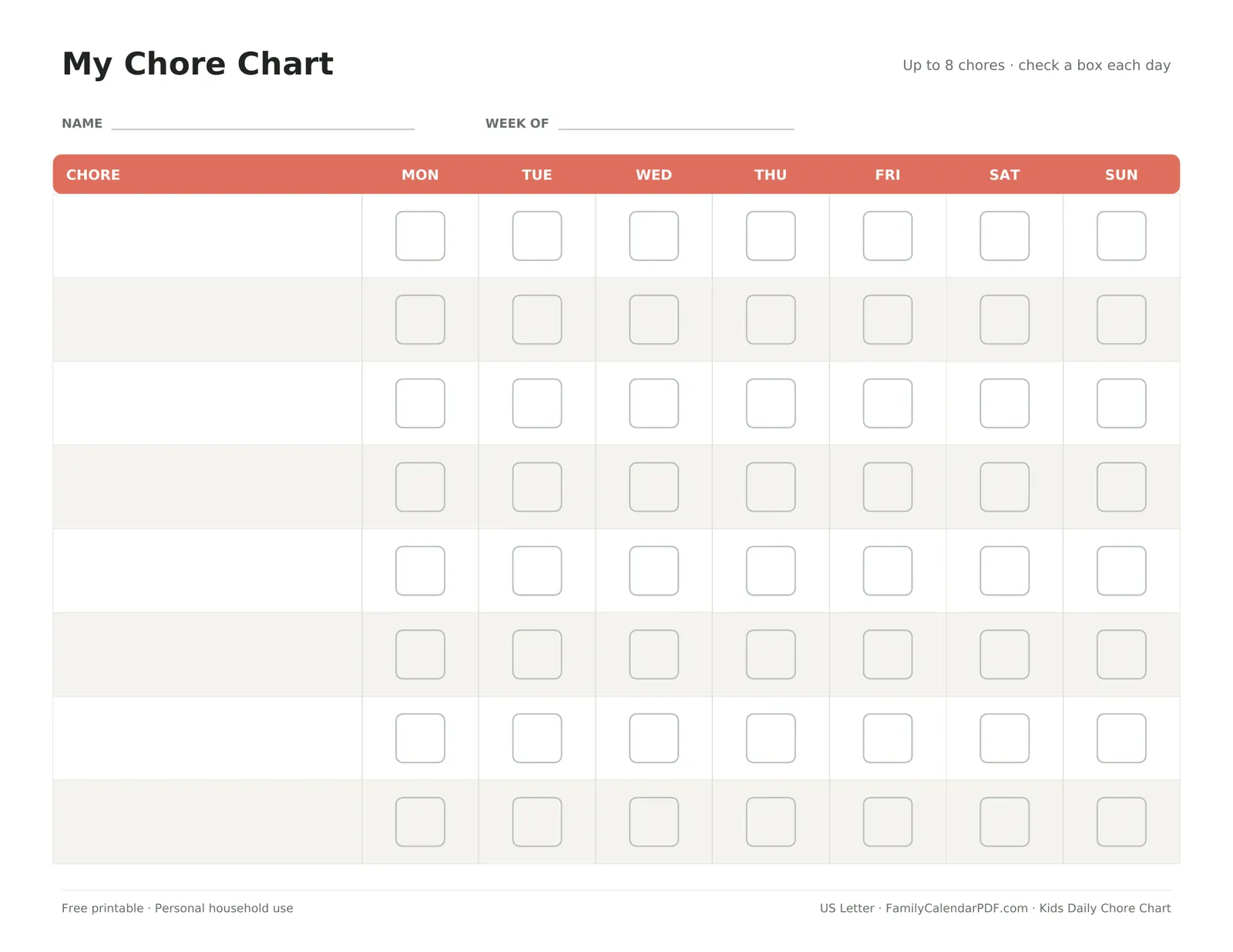
One child, one page. Rows for up to 8 chores and a check box for each day, Monday to Sunday. Large boxes for stickers or check marks.
Free PDF · US Letter + A4
A simple chart children can check off themselves. Choose a daily chart for young kids, a weekly chart for the whole family, or a teen chart with bigger jobs. No sign-up.
Pick a layout
Every file comes in US Letter and A4. Use US Letter in the United States and Canada and A4 in most other countries. Print at 100% scale.
Kids · 1 page
One child, one page. Rows for up to 8 chores and a check box for each day, Monday to Sunday. Large boxes for stickers or check marks.
Family · 1 page
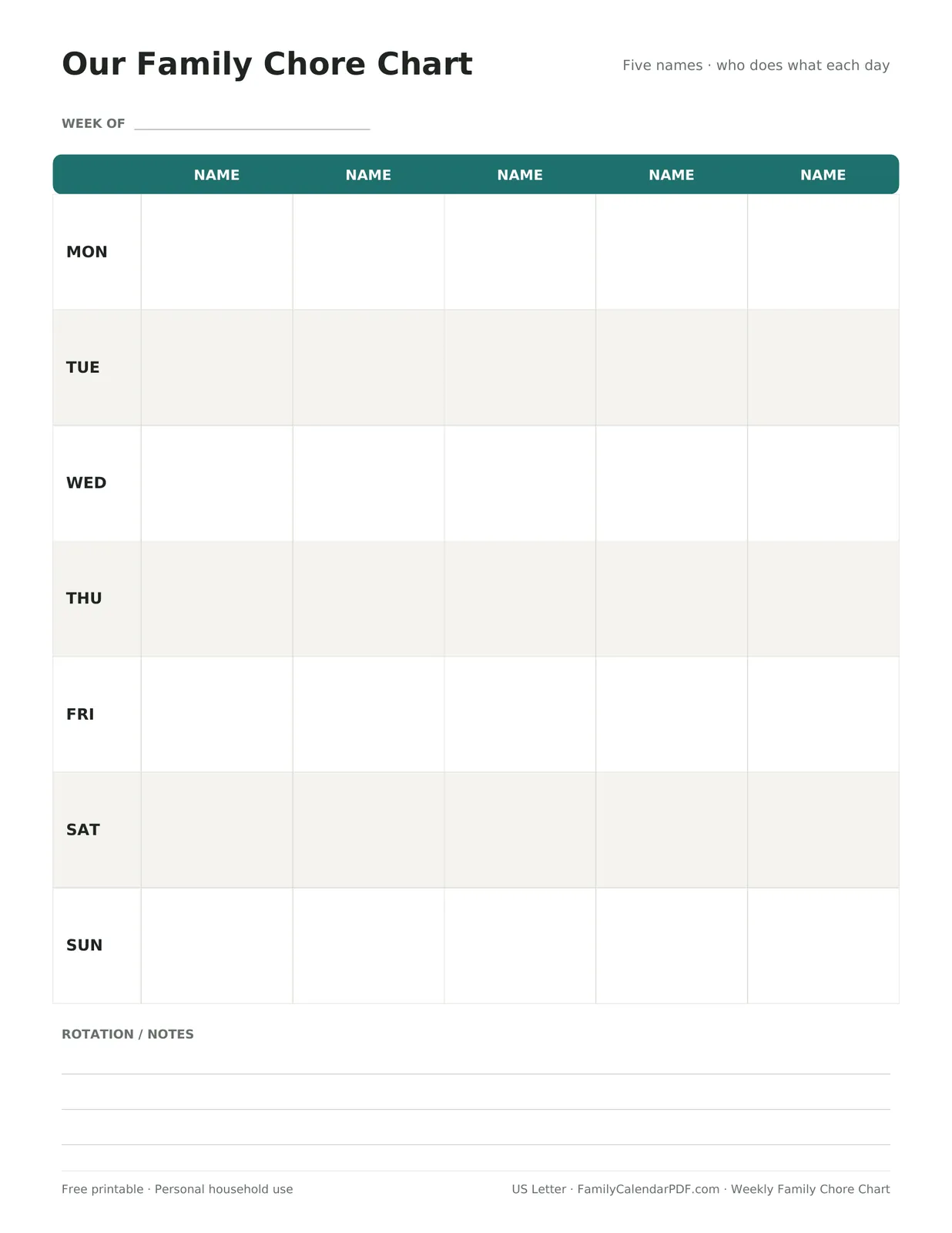
Five name columns and a row for each day of the week, so everyone can see who does what.
Teens · 1 page
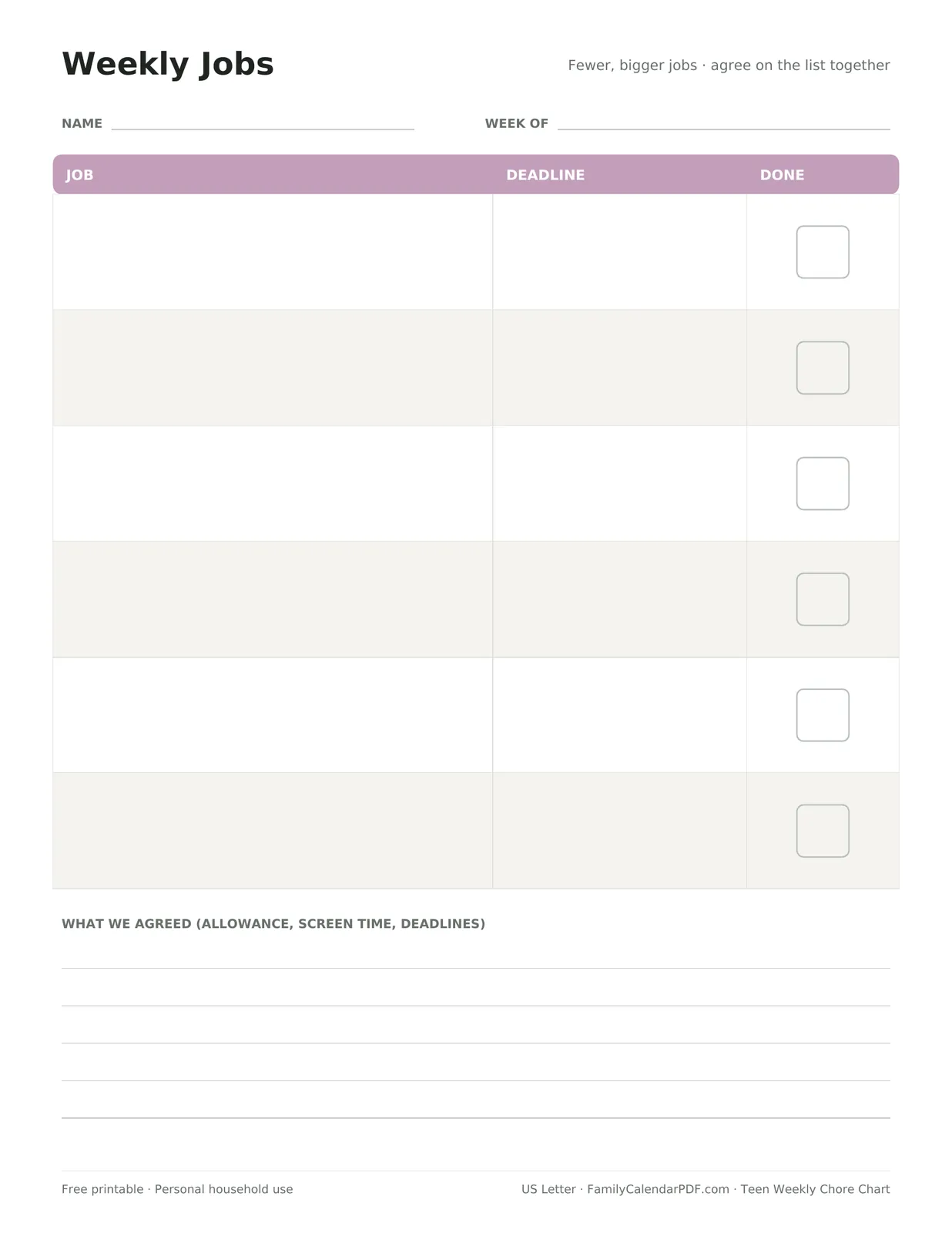
Fewer rows with more space for each job, plus a notes line for what was agreed (such as allowance, screen time or deadlines).
Blank · 1 page
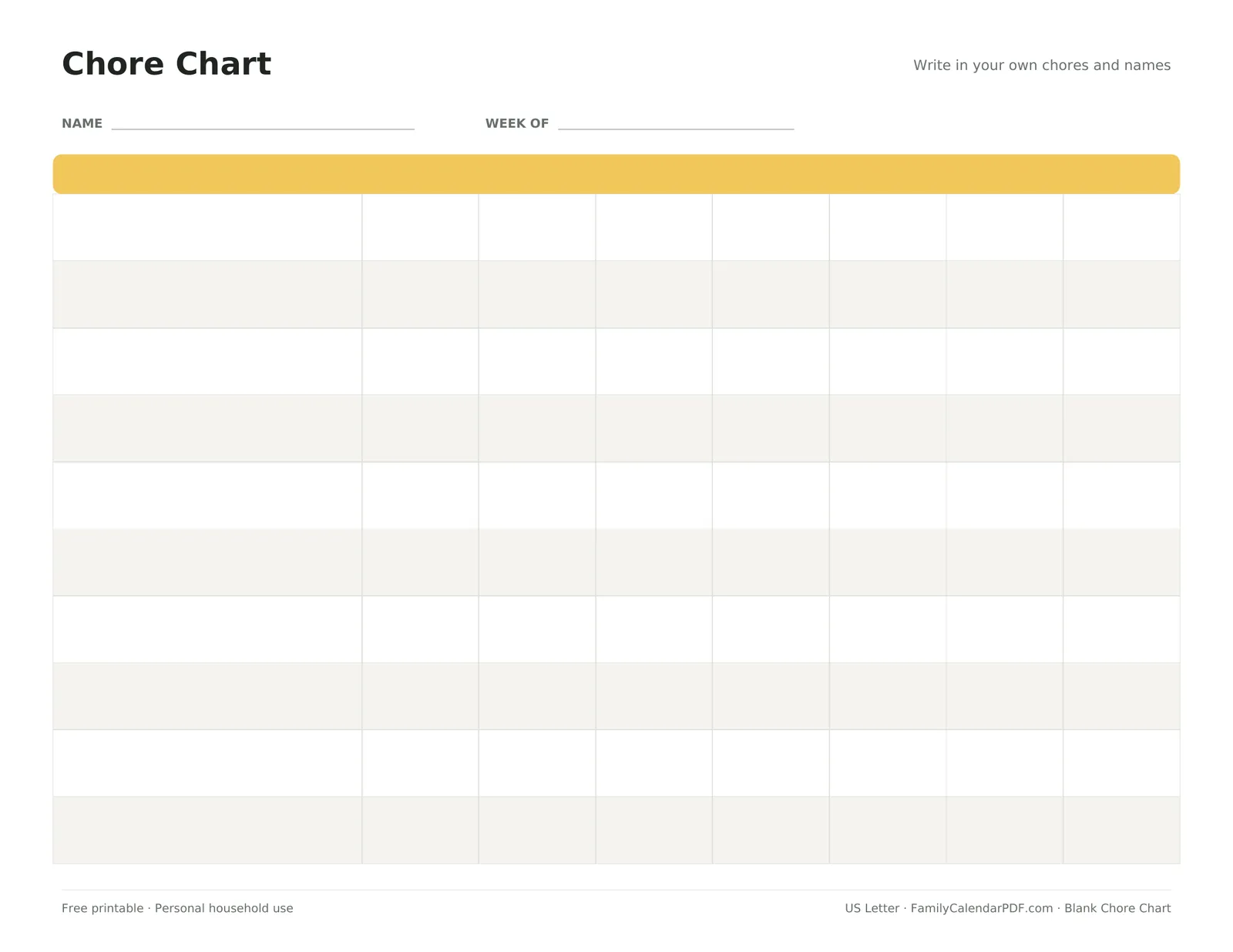
Empty rows and columns to write in your own chores and names.
The free family calendar bundle also includes a routine and chore tracker in the same style.
Every child is different, so use this as a starting point rather than a rule. Younger children usually need an adult doing the job with them at first. Older children can take a chore over once they've done it a few times.
| Age | Chores to try |
|---|---|
| 2–3 | Put toys in a basket, put dirty clothes in the hamper, help wipe up spills, carry their plate to the counter |
| 4–5 | Make their bed (roughly is fine), set out napkins and spoons, feed a pet with help, sort socks, water plants |
| 6–8 | Set and clear the table, put away clean laundry, empty small trash cans, help pack their own school bag, sweep a small area |
| 9–12 | Load or empty the dishwasher, fold laundry, vacuum a room, take out the trash and recycling, make a simple breakfast or lunch |
| 13+ | Do their own laundry, cook a simple dinner, clean a bathroom, mow the lawn, help with grocery shopping |
An honest observation: it is common for a chart to lose its shine after a few weeks. That does not mean it failed. Printing a new sheet, changing one chore or moving the chart somewhere more visible is often enough to restart it. A paper chart is easy to start over with.
When everyone in the house has jobs, the weekly family chart helps. Write each person's name at the top of a column and the chores in the rows. It makes the shared work visible: who takes out the trash on Tuesday, who feeds the dog on weekends. It also helps when parents split chores between themselves.
To keep it fair, some families rotate the bigger jobs each week and write the rotation at the bottom of the sheet. The chart pairs well with the five-column weekly planner in the free bundle, so appointments and chores sit side by side.
Teenagers usually don't need stickers, but a written list still helps. It avoids repeated reminders and makes expectations clear. The teen chart has fewer, bigger tasks per week, such as "do your own laundry" or "cook dinner on Thursday", plus space to write down any deal you've agreed on.
A few things that tend to help with teens:
Chores are easier to keep up when the week is visible. The 2027 family calendar gives each person a column, and the 2027 calendar covers the whole year. Starting fresh in the new year? The January 2027 calendar is a good place to write down new routines.
Good to know
Yes. All chore charts on this page are free to download and print for personal household use. There is no sign-up.
For most young children, three to five small daily chores is enough to start. Add more once those become routine.
That's a family decision. Some families pay for extra jobs and keep everyday chores unpaid. The teen chart has a notes line to write down whatever you agree on.
Yes. Use the weekly family chart with a column per child, or print one daily chart for each child.
Print a new copy each week. Or put one copy in a clear sheet protector and use a dry-erase marker.
Use US Letter in the United States and Canada and A4 in most other countries. Select 100% or "Actual size" when you print.